


Market Comments: Q3 2026

October 2026
Stocks were mixed in the third quarter. The Standard & Poor’s 500 Index and NASDAQ Composite Index returned 2.3% and 2.6%, respectively, while the Dow Jones Industrial Average return was -2.3%. All three indices remain well into positive territory for the year with the Dow, the S&P 500 and NASDAQ up 7.2%, 12.7% and 16.1%, respectively. Domestic markets appear on pace for a fourth consecutive year of positive performance.
Outside of the large cap domestic stocks, returns in the third quarter were more muted, though year-to-date gains have been strong. The Russell 2000 (small-cap) Index returned -7.2% last quarter but was up 13.9% through September. International stocks were mixed in the third quarter, with the MSCI EAFE Index and MSCI Emerging Markets Index returning 0.9% and -0.4%, respectively, but were up 10.9% and 23.5% through September.
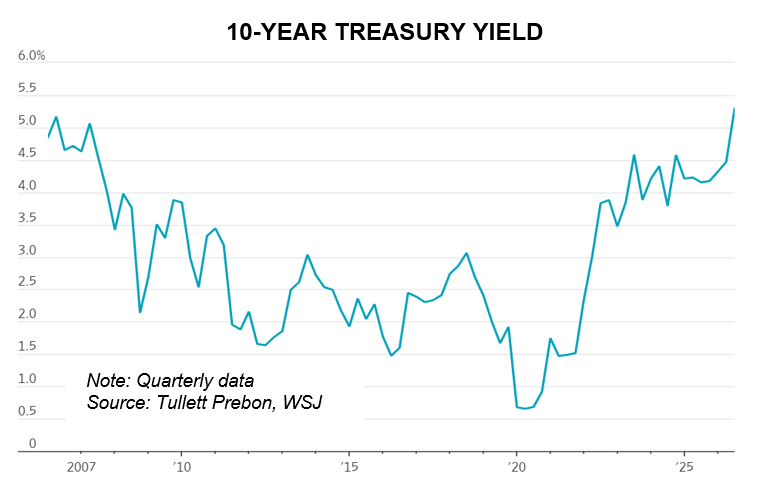
Continued inflationary pressure was evident in the bond market, pushing yields to decades-long highs. The benchmark 10-year treasury yield, changes to which are indicative of shifts in household borrowing costs, hit 5.30% on the last day of the quarter, above its pre-financial crisis yield and its highest since 2002.
Following a lengthy period of low rates and tepid inflation, save for the stimulus fueled post-Covid spike, sentiment has shifted to the idea we may be in for an extended period of persistent inflation and higher borrowing costs.
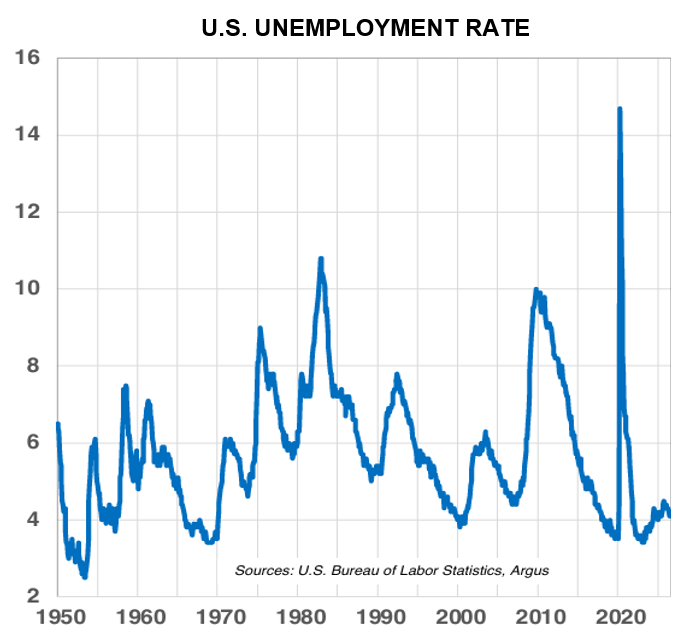
The U.S. economy added just 29,000 new jobs in September, well below consensus estimates of around 90,000. The healthcare, manufacturing, and construction segments added a combined 37,000 new jobs, with most other categories little changed. Downward revisions of 31,000 and 29,000, respectively, to July and August employment reduced the three-month average jobs gains to 51,000 from 71,000.
The unemployment rate rose to 4.2%. Expectations were for unemployment to remain at its prior estimate of 4.1%. On the positive side, unemployment has now been below 4.5% for a record 60 consecutive months. Wage growth increased $0.05 from August and was 3.0% higher year-over-year through September.
Coupled with a tame August personal consumption expenditures (PCE) inflation reading, the disappointing September employment report significantly reduced the probability of another rate hike when the Fed meets later this month. All 12 Fed members voted in favor of a 0.25% increase to the target rate at the September meeting. Both PCE and the Fed-favored core PCE (excludes food & energy) came in below expectations at 3.4% and 3.0%, respectively, year-over-year through August. Expectations were for readings of around 3.7% and 3.3%, respectively.
At present, the probability of no rate change when the Fed meets October 27 and 28 is around 80%. At its final 2026 meeting in December the probability of a rate hike is over 85%, with the most likely outcome being another 0.25% increase.
The economy continues to plow ahead. According to the Bureau of Economic Analysis, the final second quarter gross domestic product (GDP) estimate was 2.2%, well above the first two estimates of 1.5%. Both consumer spending and investment (business spending) were higher in the second quarter, while government spending was flat. First quarter GDP growth was 2.5%.
Holiday shopping trends often influence the fourth quarter narrative. Since 2002, holiday sales have grown 4% on average, including inflation, with the only decline occurring in 2008, the year of the Great Recession. With unemployment still low, expectations are for holiday shopping sales to exceed $1 trillion for a second consecutive year. However, $4 gasoline and higher heating costs could mean more muted retail sales this year. Though consumers have remained resilient of late through uncertainty, a disappointing holiday shopping season could put a dent in consumer spending, by far the largest component of economic output.
Fear over what could disrupt continued market and economic gains are numerous and well covered in the media. Among the potential headwinds are continued budget deficits and rising national debt, sustained higher interest rates, inflation, a weak housing market and continued hostilities with Iran.
Of late, however, myriad tailwinds have seemingly overcome the uncertainty and fear being felt by consumers and investors. Unemployment remains low, corporate earnings growth robust, consumer spending steady and the massive capital investment in artificial intelligence is driving productivity gains.
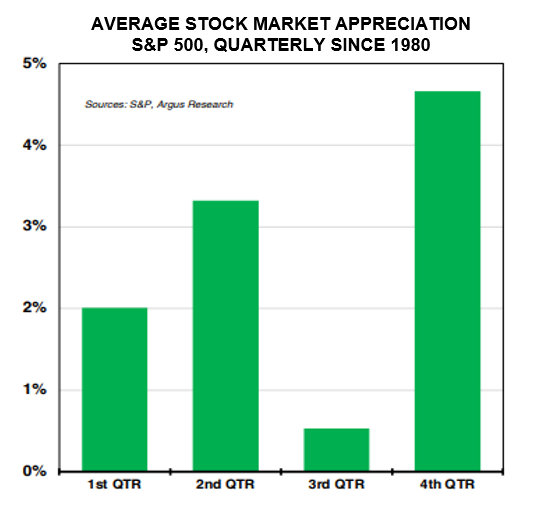
Historically, the stock market posts its best results in the fourth quarter, with average gains in the S&P 500 of 4.7% dating back to 1980. Over that span, fourth quarter returns have been positive 83% of the time and have achieved a high-water mark for year 70% of the time.
Though the quarter got off to a decent start, with mid-term elections upcoming, inflation concerns and continued fits and starts in the trade war and the Iran conflict, volatility is likely to be present in the coming weeks. Strong earnings are broadly expected and will begin being reported soon, which could help calm investor fears and lead to a fourth straight year of double-digit stock market returns.
Start planning for a stronger financial future.
Let us help you build a tailored plan that will help you achieve your financial goals.
Find an Advisor